
Civilisation
Lessons from the Past About the Past That Speak to Our Future Here and Now

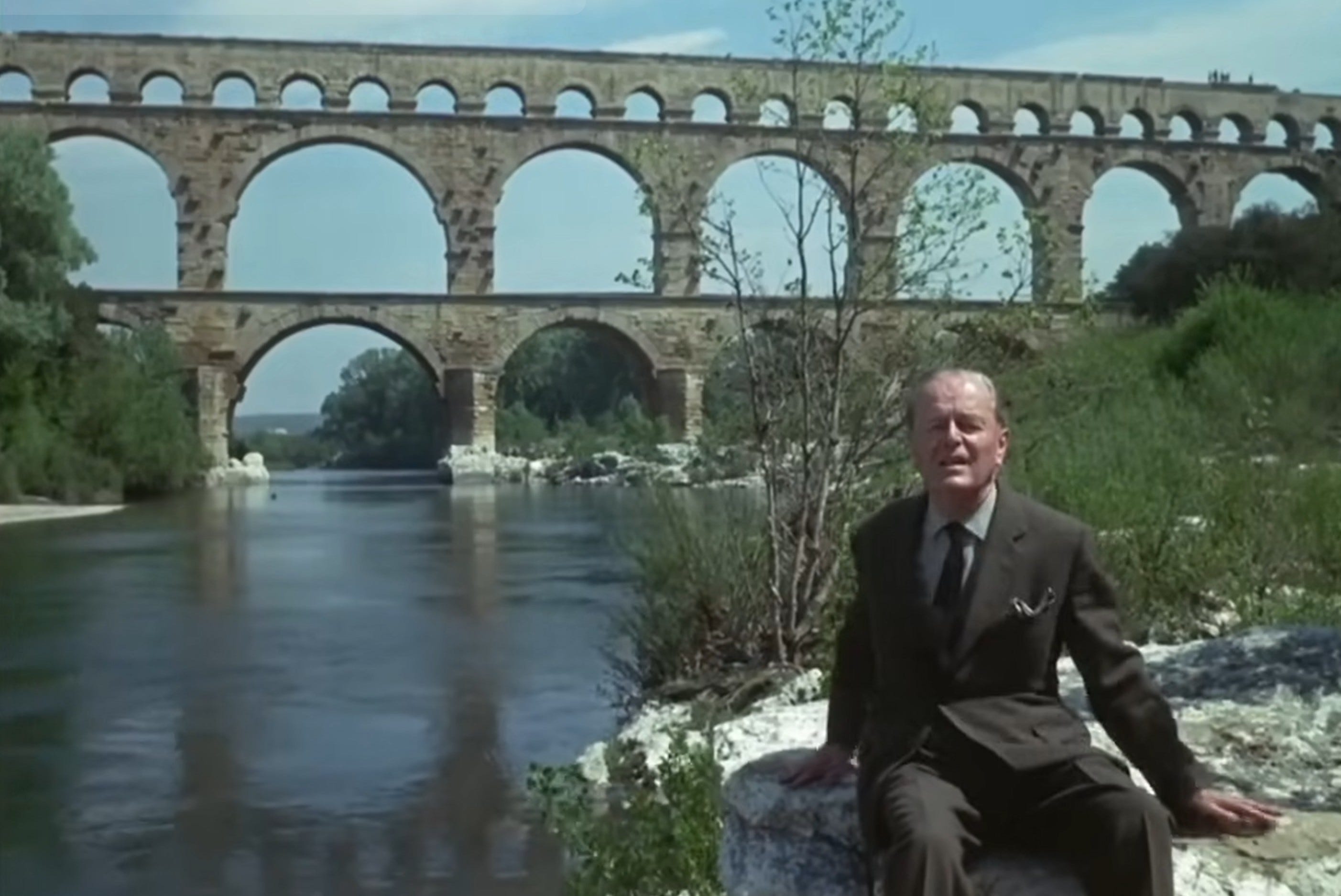
Re-watching Kenneth Clark’s Civilisation after many years is a curious experience. One does not simply revisit an old television series. One revisits an atmosphere of seriousness. A voice. A tempo. A set of assumptions about art, culture, memory, standards and value that now feel almost alien. Not because they are ancient, but because so much of modern broadcasting has become incapable of them.
Clark called his series A Personal View, and that subtitle matters. It was not an attempt at a sterilised, committee-approved global survey in which every judgement must be apologised for before it is made. It was the opposite. It was one cultivated man standing before the wreckage and splendour of the European past and saying, in effect: this matters, this lasted, this was worthy, and this is what I think civilisation looks like.
That is precisely why the series still lives.
Its weaknesses are plain enough. It is partisan, selective, aristocratic, patrician, magnificently unfair. Good. So are all serious visions. A civilisation worth describing is also one worth judging, and judgement is by definition unequal. Clark does not pretend that all things are equivalent, all cultures equally ordered towards beauty, or all works of art equally capable of carrying the weight of centuries. He discriminates. Sometimes wrongly perhaps, sometimes too narrowly it can be argued, but always fruitfully. Better that than the anaemic fog in which nothing can be ranked, nothing can be inherited, and nothing much can be loved.
One of Clark’s most important insights is that civilisation requires more than survival. It requires a little wealth, a little leisure, and above all a conviction that the society one belongs to is worth sustaining. Not perfect, not sinless, not beyond criticism — but good enough, noble enough, fertile enough to merit loyalty. That, more than anything, is what the contemporary West has begun to lose.
We have wealth in abundance by historical standards. We have comfort, entertainment, convenience, access, mobility, information, and every form of diversion ever devised. What we lack is confidence. Our ruling classes are often rich, powerful, credentialled and managerial, but they do not appear to believe, deep down, that the civilisation which produced them is worthy of admiration. They are proficient at administration, compliance, process and abstraction, but often tongue-tied when asked to speak of beauty, duty, inheritance, gratitude, excellence or belonging. They can regulate a museum, but not explain why it should exist. They can discuss growth figures, but not greatness.
And this matters, because civilisation is not maintained by GDP alone. A society cannot live forever on consumption, irony and logistics. It must also know what it is for.
That is where Clark still bites. He reminds us that culture is not decorative froth floating on top of material life. It is evidence. Cathedrals, paintings, liturgies, books, monuments, public squares, epics and ceremonies are not side quests undertaken by a prosperous people once the serious business is done. They are among the most serious things a people does. They reveal what it reveres, what it fears, what it thinks man is, and what kind of world it believes itself to inhabit.
Yet there is another lesson, one perhaps even more relevant now. Civilisation is not only Apollo and Venus. It is not only fresco and marble. It is also hidden competence.
It is the pleasure of being indoors when the rain turns sharp and inhospitable, and knowing the roof will hold. It is proper drainage. It is masonry that does not crack, mortar that sets, timber seasoned correctly, glass fitted true, doors that shut, hinges that do not sag, bricks that were fired at the right heat, concrete mixed to the right tolerances, and steel hardened to the right measure. It is standards. It is boring excellence. It is accumulated memory in practical form.
A good house in bad weather is civilisation.
The Romans knew this perfectly well. Their greatness was not merely statuary and rhetoric. It was roads, vaults, aqueducts, law, logistics, surveying, military engineering and materials science. Their temples stood because someone understood weight, force, stone, lime and water. Their empire moved because someone laid out roads that held in all seasons. Their civilisation was lofty because it was also concrete in the most literal sense.
We moderns are often inclined to separate the beautiful from the functional, as though culture sits in one department and infrastructure in another. But in the older and truer view, both belong to the same civilisational impulse: the imposition of form on chaos. A society that cannot maintain drains will not long produce masterpieces. A people that loses the habit of competent building will eventually lose the habit of serious thinking too. Sloppiness spreads. Standards are indivisible.
That is one reason the decline of cultural confidence is so dangerous. Once a civilisation ceases to believe in itself, it does not only stop making grand art. It starts cutting corners everywhere. It becomes embarrassed by quality, suspicious of excellence, hostile to inherited standards, and unable to distinguish between authority and oppression, or between hierarchy and cruelty. Its elites continue to speak the language of values, but increasingly those values are procedural rather than substantive. Safety, inclusion, access, sustainability, compliance — all very well in their place, but none of them, by themselves, can answer the old and necessary question: what is the good life, and what kind of society is worthy of handing on?
Clark’s answer was imperfect, personal, and heavily weighted toward the European high tradition. Yet even his limitations now seem instructive. At least he believed there was such a thing as a tradition worth defending. At least he was willing to say that some works, some forms, some achievements stand above others. At least he understood that civilisation is fragile, and that barbarism is never wholly defeated. It is merely held at bay — by memory, discipline, confidence, standards, and a certain spiritual ambition.
That last phrase may be the key. Civilisation cannot be reduced to material comfort, but neither can it survive without it. It requires enough order and prosperity to make higher things possible, but then it must actually choose those higher things. Leisure can produce philosophy, music, architecture and grace; it can also produce decadence, triviality and self-contempt. Wealth can underwrite patronage, scholarship and beauty; it can also subsidise vulgarity on a colossal scale. The difference lies not in resources alone, but in judgement.
And so the past speaks to us not by flattering us, but by exposing us. When we look at the cathedrals, the libraries, the roads, the bridges, the paintings, the ordered towns and the enduring buildings of earlier ages, we are forced to ask not merely how they lived, but whether we remain capable of comparable seriousness. Do we still believe that continuity matters? Do we still build to last? Do we still educate for judgement rather than credentialling? Do we still think beauty is an achievement rather than an indulgence? Do we still possess the inner confidence required to say that our civilisation, though flawed, is ours and worth preserving?
Those are not nostalgic questions. They are urgent ones.
The lesson from the past is not that we should become medieval, Roman or Victorian by imitation. It is that civilisation, in any age, depends on a marriage of material competence and moral confidence. It needs masons and poets, engineers and patrons, tool steel and philosophy, drainage and transcendence. It needs roofs in the rain and visions under the roof.
Kenneth Clark understood that. Looking around now, one suspects we would do well to understand it again.